Our New Mobile App is Coming Soon!
Interested in trying out our new mobile app for iPhone or Android as soon as it comes out? Subscribe to our email newsletter below to receive an update as soon as we launch.
Follow us!


%201.svg)


May 13, 2026
The Impact Overcrowding Has on Your Venue
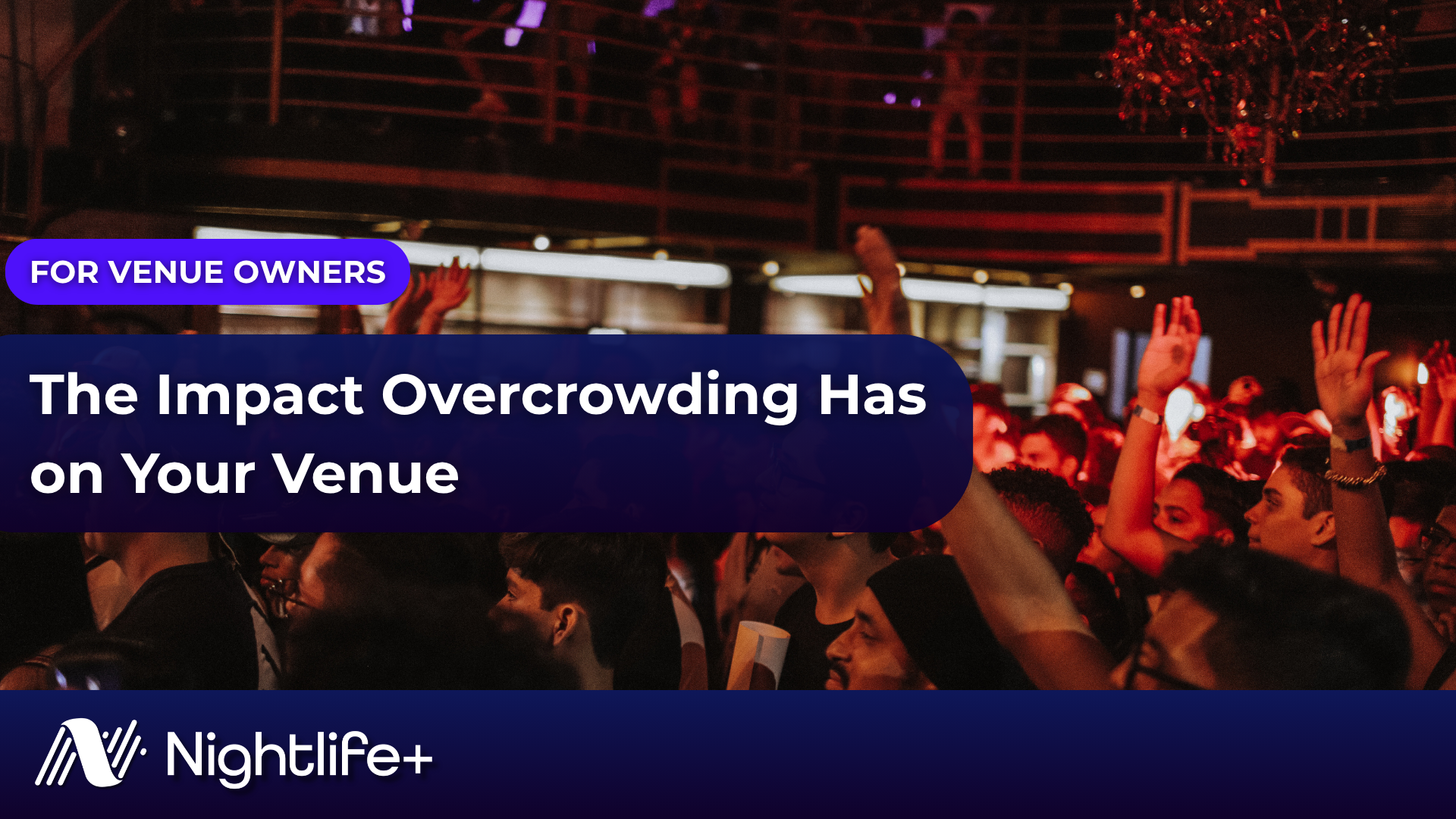
For many nightlife venues, a packed room feels like the ultimate sign of success. Long lines outside, a full dancefloor, and a busy bar create the impression that everyone wants to be there. And to a certain extent, that is true. Energy attracts energy in nightlife. People naturally gravitate toward venues that feel active, exciting, and in demand. But there is a dangerous point where “busy” turns into uncomfortable, chaotic, and frustrating. That is where overcrowding starts hurting the guest experience, damaging your reputation, and quietly reducing long-term customer retention. Guests will tolerate crowds. They will not tolerate feeling trapped, ignored, or stressed. The most successful nightlife operators understand that there is a major difference between a venue feeling alive and a venue feeling overwhelming.
Guests Want Energy, Not Chaos
Nobody wants to walk into an empty nightclub on a Saturday night.
But guests also do not want to:
- Wait 25 minutes for a drink
- Struggle to move through the venue
- Constantly get pushed around
- Stand in washroom lines all night
- Sweat excessively because the room is overheating
- Feel like they have no personal space
People go out to escape stress, not experience more of it.
When overcrowding reaches a certain level, the emotional experience of the night changes completely. Instead of excitement, guests begin feeling irritation and exhaustion.
Most customers will never directly tell management this. They simply:
- Leave earlier
- Spend less money
- Avoid returning
- Choose competing venues next weekend
- Leave negative reviews online
The damage often happens silently.
The Guest Experience Starts Breaking Down
Many operators focus heavily on maximizing capacity during peak hours. More guests usually means more immediate revenue.
But overcrowding creates operational friction everywhere inside the venue:
- Slower bartending service
- Delayed bottle presentations
- Longer security interactions
- Congested walkways
- Slower payment processing
- More drink spills
- Frustrated guests approaching staff
- Increased tension between groups
Even small delays feel significantly worse in an overcrowded environment.
A guest waiting 10 minutes for a drink in a comfortable venue may stay patient. A guest waiting 10 minutes while getting bumped into repeatedly in an overheated room becomes irritated fast.
That emotional difference matters.
Your Staff Feels the Pressure Immediately
Overcrowding does not just affect guests. It affects your entire team.
Bartenders become overwhelmed. Servers become rushed. Security becomes reactive instead of proactive. Hosts absorb frustration from guests entering the venue.
As pressure increases, service quality naturally drops.
Friendly interactions become shorter. Attention to detail disappears. Mistakes happen more frequently. Communication between staff weakens.
Even strong teams eventually hit operational overload.
One of the biggest mistakes operators make is assuming guests automatically forgive poor service because the venue is busy. Modern nightlife customers compare every experience to the best venues in the city, not the average ones.
A packed room is not an excuse for a poor experience anymore.
Overcrowding Quietly Damages Your Reputation
Years ago, guests would tell a few friends about a bad night.
Today, they post it online instantly.
Videos showing impossible crowding, aggressive lines, chaotic bars, or guests unable to move through the venue spread quickly across social media. What operators believe looks “popular” can easily look disorganized to potential customers watching online.
In nightlife, perception matters.
If guests consistently associate your venue with:
- impossible movement
- uncomfortable heat
- exhausting waits
- overcrowded dancefloors
- stressful entrances
- poor crowd control
your brand slowly shifts from “high demand” to “not worth the hassle.”
That transition happens faster than many operators realize.
Safety Risks Increase Fast
This is where overcrowding becomes more than just a guest experience issue.
Excessive crowding increases the likelihood of:
- altercations
- slips and falls
- blocked pathways
- medical emergencies
- security incidents
- staff communication breakdowns
Even small situations become harder to control when movement throughout the venue is restricted.
Strong nightclub crowd management is not just about security. It is part of the overall guest experience and operational strategy.
The best venues make guests feel safe, comfortable, and in control of their night, even during peak hours.
The Best Venues Rarely Feel Overcrowded
Interestingly, some of the busiest venues in the industry rarely feel stressful.
Why?
Because experienced operators focus heavily on flow and capacity management:
- strategic table placement
- controlled entry pacing
- proper staffing ratios
- clear pathways
- efficient bar layouts
- temperature management
- strong floor communication
- balanced reservation management
Guests may never consciously notice these operational details, but they absolutely feel the difference.
Great nightlife operations feel smooth, not chaotic.
That smoothness is what creates repeat customers.
Long-Term Revenue Matters More Than One Extra Group
Many venues fall into the trap of chasing every additional dollar possible during peak hours.
Another reservation. Another bottle service table. Another group at the door. Another oversold section.
The short-term revenue feels worth it in the moment.
But operators rarely calculate the long-term cost of damaging the experience for hundreds of guests already inside the venue.
Sometimes making slightly less on Saturday night is what allows a venue to stay packed every Saturday night.
The strongest nightlife brands focus on consistency, customer retention, and experience quality over squeezing every possible dollar from one busy evening.
Final Thoughts
A full venue should feel exciting, not exhausting.
Guests should walk in and think: “This place is alive.”
Not: “I need to get out of here.”
The venues that win long-term are the ones that understand the balance between energy and comfort. Those are the venues guests recommend to friends, revisit regularly, and willingly spend more money at over time.
If you want more visibility, more customers, and more VIP bookings for your venue, get listed on Nightlife+.